Sabrina Fletcher’s TFMR Journey: A Story of Loss, Healing, and Resilience


 RSS Feed
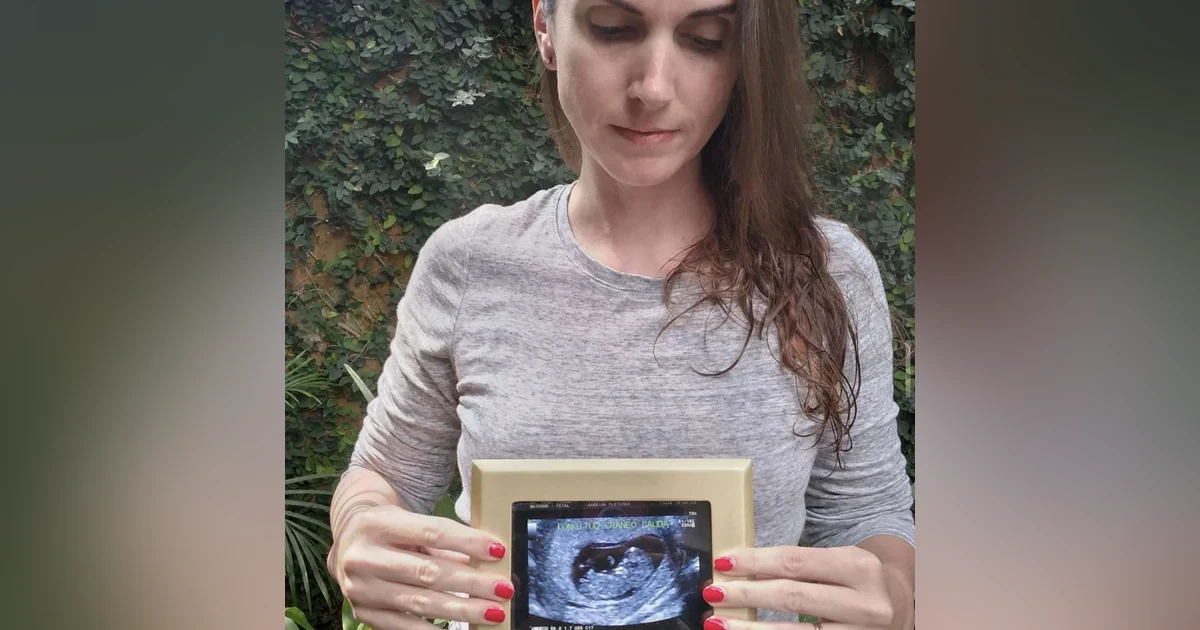
Have you ever wondered how you would handle a deeply desired pregnancy with fetal anomalies deemed incompatible with life? In Sabrina's case, the stakes were as high as life and death, not just for her baby, but potentially for her, too, if she continued the pregnancy. I invite you to journey through the heartrending story of Sabrina Fletcher, a mother of three and a TFMR (termination for medical reasons) Doula, who bravely faced this very situation. Sabrina shares the precious memory of her first home birth, beautifully accompanied by her husband's flute and chanted prayers. Her joy was replaced by shock and desolation when her second pregnancy was determined to be high-risk, and she was told that there was little to no hope that her baby would survive more than minutes after birth.
Sabrina, with heartfelt honesty, opens up about the ethical dilemmas she and her husband grappled with following the distressing news concerning their baby's health. She discusses navigating their way through the restrictive laws in Mexico, the trauma of the procedure, and the importance of having the option to make such decisions with as much time and information as possible. Sabrina's candidness about her emotional journey is simultaneously raw and enlightening, shedding light on the importance of honoring the child that was lost, as a vital step in finding closure.
A story of resilience and healing, Sabrina's experience didn't stop at loss. She faced her third pregnancy with a warrior's spirit, using an array of psychospiritual tools to manage the gripping anxiety that lingered. She touches on the crucial role her community and her doula played in bringing her to a place of peace during her third labor, and how she visualized bringing her third daughter's soul back from the far ends of the universe. Sabrina’s extraordinary journey underscores the power of support during life's most challenging times and reminds us of the resilience of the human spirit. Join us for this moving episode as we navigate the intricate paths of loss, healing, and ultimate redemption.
To connect with Sabrina go to thetfmrdoula.com
Coaching offer
Kelly Hof: Labor Nurse + Birth Coach
Basically, I'm your birth bestie! With me as your coach, you will tell fear to take a hike!
Connect with Kelly Hof at kellyhof.com
Medical Disclaimer:
This podcast is intended as a safe space for women to share their birth experiences. It is not intended to provide medical advice. Each woman’s medical course of action is individual and may not appropriately transfer to another similar situation. Please speak to your medical provider before making any medical decisions. Additionally, it is important to keep in mind that evidence based practice evolves as our knowledge of science improves. To the best of my ability I will attempt to present the most current ACOG and AWHONN recommendations at the time the podcast is recorded, but that may not necessarily reflect the best practices at the time the podcast is heard. Additionally, guests sharing their stories have the right to autonomy in their medical decisions, and may share their choice to go against current practice recommendations. I intend to hold space for people to share their decisions. I will attempt to share the current recommendations so that my audience is informed, but it is up to each individual to choose what is best for them.
0:01 Hello, today I have with me Sabrina Fletcher. Sabrina is the mother of three, with two living children. Sabrina's birth journey includes experiencing a wanted pregnancy that was terminated for medical reasons. The acronym for that is TFMR, which we will be referring to throughout the episode. That experience profoundly shaped her life and inspired her to become a TFMR doula. To connect with Sabrina, you can find her by the handle at the TFMR doula on all social media. Sabrina, welcome and thank you for joining me. Hi, thanks a lot, kelly. I'm very honored to be here and to share my story in a space that is for all birth journeys, because even myself, for a while, I didn't know well, it was a loss.
0:54 My child isn't here. I had to have a DNC, I had to have a procedure. So is it really a birth? Do I fit? And I feel like I fit. You've invited me onto the show and it really means a lot to be able to share my story in a place like this. Yeah, it's really important to me to validate all mothers and recognize mothers of children who are still with us and children who are not with us. Thank you, I am anxious to hear your story and how it has shaped your life, so I am going to sit back and listen and let you proceed. I can begin before the loss. So I had a pregnancy that ended up with my daughter, who is now 10.
1:39 And that pregnancy was all smooth sailing. I was so innocent and nothing went wrong and I just thought, oh, this is just the way things are so close to go. My then partner he's now my husband and I even spent part of the third trimester traveling. We were so laissez-faire. It's just, you know, have fun, enjoy each other, enjoy this pregnancy, enjoy this baby. Everything was fine. I was cleared through all the ultrasounds, all the different checks, all of my blood tests. I was 29, 30 at the time and we even traveled on boats, backpacking like crazy stuff that I did not do in my other pregnancies.
2:27 And we both look back and we think we were nuts really to be that happy-go-lucky. And yet we were. We were very happy-go-lucky in that birth and that pregnancy and birth and the birth ended up being it went pretty smoothly. It was a home birth. We had planned for it to be a home birth. There were two midwives and a doula, so I did have a doula at that birth and the active labor was about 12 hours, so maybe a little bit more, maybe 14. The contractions started ramping up around midnight and then she was born at two in the afternoon.
3:08 I was pushing on my bed in a what's the position? Like I'm only thinking about in Spanish because I live in and the knees? No, no, your knees are up, you're like crouching, oh, squatting, Squatting, squatting. Yes, I was only thinking the word in Spanish. I can't remember the word in Spanish. I speak Spanish too, and now I got. I got Jada. Yeah, that was the right-. Yeah, that would be good so you can help me out if I forget. Yeah, excellent, and it was really lovely. My husband caught her, or helped catch her, and I had a midwife on each side. I felt the power of the ancestors and all the help of these women and birth workers throughout the ages and it really was a very magical experience.
3:59 It wasn't without pain, I did tear, but it was beautiful. There was a part in my labor where it wasn't progressing and then, when I got to the pushing part, something switched because my husband took out his flute. So he's Mexican and there's a, there's a lineage through his grandmother, corandero healers. He does sweat, lodge and massage and other sorts of ceremonies. And he took out his flute and he started playing and singing and saying we're waiting for you, we're waiting for you, and we had actually conceived that baby.
4:43 It was a surprise. We were only dating like six months. So I didn't know you know where do we stand, me and him. I didn't know how strong our relationship was, if we would be able to continue, if we were, you know, if we would make it through becoming parents. But in that moment I fully felt his commitment and I was able to then give birth. So there's a scientific reason for that, I imagine. So studies have shown that the oxytocin, the internal oxytocin, is released when a woman feels safe and so, and also when you feel loved. And so, in that moment, when you felt safe and loved, your body was able to release that hormone that helped you give birth, which I've had multiple friends and people on this show that have experienced that same thing.
5:33 Thanks for sharing that. I'm tearing up. I know this will be a podcast I forgot my Kleenex but we're going to tear it up a little bit in this episode. So take your time and you can continue your story when you're ready. Sure Thanks, my daughter. She was born no issues. She grew up into a little kid. When she was maybe two, three, somewhere around there, she started asking for a little sister, a little brother. Well, specifically, a little sister. She really wanted to have a little sister. She really wanted another girl. And I would tell her well, we can't really choose because we weren't going IVF route where you already know.
6:15 So I would tell her well, you can't choose, but you know we'll love any baby that comes into our family. They'll be your brother, sister, they'll be your sibling. And my husband wanted to wait more time. I had a pretty rough go after she was born, with postpartum depression, and I think he wanted me to be really well and really ready to go into, you know, another pregnancy and to be able to face that if I needed to face it again. And he also wanted our younger daughter to be old enough, a little bit more independent, because she still, you know, really needed me when she was really really little.
6:57 So we decided that we were ready. I mean, we weren't ready, Like you're never ready. We were ready and we were ready and I took a whole fertility course with you may know the podcast Fertility Fridays. I took one of her. It's not FAM, she does another method, the Justice method, but still you're checking your temperature and the mucus and all of the signs and you're tracking. So we started doing that. I had my IUD removed, but we were using that method as birth control so that my uterus would heal, before then conceiving again and having another child.
7:41 And during this time we also decided to get married. So then the timeframe got pushed a little bit longer. We thought, oh, you know, even if you're, if I was going to be pregnant at the wedding, that would have been fine, but we can also wait until after the wedding. And our baby was conceived during the honeymoon period, after our wedding. It's really magical that we consciously went into that pregnancy and I took all of that time to learn about my own fertility, my own cycles, different supplements, nutrition. I was quote unquote doing it all right.
8:25 I thought, oh, I've got this, we're doing it all right. We got married. This time I'm drinking the green sludge or whatever, whatever it all was. I'm taking all of the prenatal stuff, even the most organic, chelated. There's like all this, all this stuff, and but there was something. There was something with that pregnancy. Looking back. I know hindsight can be 2020. But looking back, there was a sense of dread and even even on the night that we conceived her, I could feel her baby spirit, her spit, the like, the spirit baby in that form.
9:08 And this has happened in all three of my pregnancies that I feel them and they ask, and I say yes. And so she was there and she asked to you know, to come in to be conceived through me, and I said yes. And she said something along the lines I mean it's not really like straight out English or sentences, it's more of a feeling. But there was this sense of but it won't be easy. This was her message to me and I thought, okay, well, what's easy? You know, I didn't know how hard, hard was going to be in this pregnancy, but I said yes. And I said yes even to the difficulty that she was expressing in her spirit baby form.
9:56 And then, when we got a little bit more into the pregnancy, there were the ultrasounds in the tests. All my blood work was fine, so the maternal health side was fine at this point, but I had this dread still of the upcoming ultrasounds and I've recently been going back through my draft. I'm going to turn this whole story into a memoir, just on this pregnancy loss part, on my second pregnancy, and I was reading back on notes and journals and just of that whole time and there was an ultrasound appointment coming up and I had mentioned it so many like, reminded my husband so many times that he was starting to get frustrated Like what?
10:46 Why are you reminding me so many times? Do you think something is wrong? Is what he asked me and I had to admit to him. At that point I said yes, I have a feeling, but I hope it's wrong. And we went to that ultrasounds. There was a dating ultrasound that looked fine. That's like six weeks or five weeks or seven weeks, something like that. That one was fine but it was in the 1114. And they did actually find something wrong, but not with the baby. That one. They found that I had a hematoma, so it's like a bleed subchorionic hematoma.
11:26 So it's in the in the placenta. He showed it to me. The doctor showed it to me on the screen and said could be a problem or it could resolve on itself. He put me on moderate bed rest. He said I could still walk around, I could still go out if it was easy stuff and he put me on progesterone. So at that point I thought, okay, maybe this is what we have to overcome. And then I, when I got home, of course I got on all the baby blogs and forums and freaked myself out.
12:08 But there was also a lot of hope. There were a lot of stories that everything was okay. There were other stories that there was bleeding throughout the whole pregnancy. There are other stories that they had lost the baby. So, okay, well, whenever is coming is coming, and I will just have to confront it and it'll take it really easy. I couldn't carry my daughter any longer. I wasn't supposed to carry stuff. I tried not to cook. We did a lot of ordering in and the doctor scheduled us for two weeks out for a follow-up ultrasound because at the time the baby was measuring small.
12:49 I think that this has to do with the problem that they found later. But she wasn't at the point in development where he could fully do the 1114 scan, which they look for different potential markers of chromosomal problems or even the beginning of some other conditions or heart condition. So two weeks later we went in and that appointment is seared in my brain, heart and body. It just felt very different from any other scan I had ever gotten and this is my second pregnancy, so I had been through a fair amount of them with the silence. I just remember the silence and furrowed brow as he was trying to take more and more and more pictures, just so many pictures, and that went on for felt like an eternity.
13:41 It could have been two minutes, it could have been five, and then he said your baby, something looks very different since the last time you came and he started to explain all the different things that he was able to see on the ultrasound. There were two sacks, cysts on the back of the baby's neck and the baby had swelling pretty much all over her. We called her we don't really know what sex the baby was, but I'll call her her for the rest of the interview and telling the story and all around her body, and maybe he would have had an even higher resolution ultrasound.
14:21 There may have been swelling already in the heart and the different organs and she was also missing a nasal bone. So all of those markers put together. He said that he had seen cases like these and that most of these babies almost all didn't make it to term or really wouldn't live more than a few minutes or a few days. The doctor explained that it could be linked to a genetic issue or it could have been a heart condition, that sometimes babies at this stage in development have high drugs, Maybe if there's something wrong with their heart, and my baby could have also had a heart condition on top of having a genetic condition.
15:05 So it could have been all of the above. And it was also there while I was still laying on the table getting the ultrasound that he asked us. It was just me and my husband there in the room. He asked us what our beliefs were. I don't remember exactly how he worded. He was very kind, he was very open and he did not push either way, and even with his questions they were not leading. He just asked us what our religious beliefs were on termination and we weren't making a decision right then.
15:50 We had just found out two minutes ago. We were still in shock, we were in crisis, we couldn't decide anything right then, and he also knew that he did not push us to the side. But he also did say that because of the laws and this is very relevant for many places in the world if we did decide to go that route, that we needed to make a decision. He wasn't pushing us to make a decision, he was just stating facts of the situation, which is dire, and I asked him what that would look like in this state. So we're in the state of Morelos, which is outside Mexico City State province.
16:33 It's not really a state the capital area it's own thing, but in this little state that's right outside Mexico City, he said that it would have to go through a committee. An ethics committee, Like some other people, would decide for me some random doctors that I don't even know. And he knew who my gynecologist was and he said well, you can talk to her and she would have references for you. But since we were in the state of Morelos and because he's a doctor in the state of Morelos, I think that that was pretty much all that he felt like he could legally say without potentially getting in trouble, which I understand, his hands were tied and we needed support.
17:17 That doesn't change the fact that we needed support in that moment. He did also say that if we decided to continue the pregnancy, this was now a high risk pregnancy and he would be seeing us every week, that's a lot at that stage. That was how many weeks. Well, looking through my notes I saw that we were at 12 weeks and six days on that day, so almost 13 weeks, and he said the cutoff was 14 weeks. So we literally had eight days to decide and there were weekends in there and I didn't know.
17:57 Are there three day wait periods, just like crazy places in the US? I? It's very unfair because of course there are emergency health issues that come up with anybody who has a body and sometimes you need to make quick medical decisions. But with something like a genetic condition, you need more time to research and decide and figure out and learn more and talk to people who live with it, families who live through it, families who lost their children to it. I wanted more information.
18:37 I spent many nights not sleeping trying to smash all that information into my head over the next few days. But when I left that doctor's appointment I left with a little sheet of paper that said Turner's syndrome and the whole, ultrasounds and everything, all the findings, all of that. But that gives you a label that may or may not be true, but right, we don't know and, oh, and I also asked is there any way to find out? you know, what kind of prenatal testing could we find out, to find out more? And he said well, you could do an amniocentesis, but you have to wait until you're 18 weeks and at that point in time, this was in 2018, very early in 2018.
19:20 But the NIPT testing it still is in standard practice here in Mexico. So I know that some other folks who have this happen to them at this point. They get offered the NIPT testing, which is also not a diagnosis, but it can screen and it can give you some more information. So I know this would just add stress to the situation. You had another child at home. Did you consider going back to the States and finding more information, or is that just completely not a possibility? I didn't want to give birth or lose my baby or, you know, I didn't know of getting on a plane with like cause a miscarriage either. He's saying this pregnancy is very delicate now and this is a high risk pregnancy.
20:05 Yeah, I just feel like when people hear stories like this, their brain starts going in that pathway where they're like well, did you think of this, and did you think of this and did you? Think of this, you know, and so I really want a different level of understanding for things like this, where we can kind of hold space for the fact that not all the options are always available. This is so fast and we're learning so much very quickly and everybody is trying to make the best decision possible and the most merciful decision possible, and having laws that are very restrictive does not allow for the time to make informed decisions in the way that they should be made in this type of situation.
20:51 No, I kept thinking this is pro-life, that I have to rush this, that I can't even find out what the real diagnosis is, that I can't use resources that are available in other countries or other states or with a longer time table. Yeah, and then I assume and maybe I'm projecting that your goal was to be merciful to your daughter and to do what would cause the least amount of suffering for her. Yeah, we had to consider all of the outcomes and sort of extrapolate decades into the future without even knowing you know a piece of paper with Turner's syndrome on it and this ultrasound, and decide now.
21:31 And I had to consider I mean, I had to go and read all the different stories, read people's different experiences. I found out that high drops can lead to a condition in the pregnant person. The pregnant person can get high drops as well, swelling in their own organs, which is called mirror syndrome. Though it really was a high risk pregnancy now, yeah, and I was and my health was at risk. And I also learned that many of these babies, if they do make it closer to term, if they do try and save them I don't even know how long saving is, if it's just a few minutes, if they can live for a few days, if they're, you know they have a breathing.
22:19 So many different factors I don't know it's going to be different for each individual case, right, but I was looking at you know how extreme my daughter's high drops already was at this very early stage and the other markers that she had. It just felt like insurmountable odds for her to even overcome living through a cesarean section. Yeah, and they're not even a cesarean section. It's something called an exit strategy where they have to open you up this would be vertically and remove the baby and the placenta all at once. And you know, I didn't know if it would be worth it to my body and her body and the whole everything that was going on, to go through all of that trauma just to have her live an unknown amount, yeah.
23:06 And then I think something else that isn't always considered when reflecting on some of these stories and the people that go through them is how is that going to affect the next child that might be conceived, the next child exactly? Are we putting that child at risk? Are we making it so that we can't have another child, which I'm not sure why? That's sometimes not considered when thinking about these decisions, but I just want to pose that as something that parents are thinking about, because if you're the vessel for this child to enter the world in a healthy manner, that needs to be cared for as well. Otherwise, it's going to affect the health of the next child also, as well as you and your ability to care for your children.
23:51 So there's just so much more that goes into this than just choosing in an eight-day span, how to proceed with this pregnancy. Exactly. We had already decided that we were going to go through with determination and we had to cross state lines. We were in then in Mexico City, because I just said no to the ethics committee thing. I said no way, I'm not putting myself through that, no way. And I know that I'm privileged we were privileged to be able to travel, to be near enough to another state that would see us at that point. And I ended up it was on the day Like that was the cut-off day, but perhaps the doctors didn't worry because the baby was measuring small.
24:39 But I think she was measuring small because she was very sick. But we were in Mexico City and my husband's family is from there, many of them still live there, and his nephew, who is my age, he's an adult, he is. What was he doing at that point? I think he was in labor and delivery, but he had been in NICU nursing, so he was a NICU nurse and then they had moved him to labor and delivery nurse. So he knew each side. He knew the baby side, pregnant person side, all the different factors, and he looked over our scans and he heard what the doctor had said to us and he said, oh yeah, these babies.
25:24 If they even do survive to a certain point, you'll have to have what I just explained the exit strategy he said very traumatic to your uterus. He said if it was me I would choose this too, also for the health of your uterus, because your first pregnancy was a vaginal regular in quotations, what's regular but a vaginal birth. You can do that again through helping this baby die and having it was a DNC, so they say surgical, but it's not even really a surgery, it's a procedure. Yeah, and it's one of those procedures that I had a doctor come on and explain kind of staging for some of these procedures.
26:09 But if you're early enough in the process then it is a procedure that's still an option. And it felt like you, were early enough in the process. So it is it's difficult, but it's also one of the factors that makes it important to have the option to make these informed decisions early enough to reduce the trauma. Yeah, I did want to vaginally deliver my baby, though, but it was not given to me as an option Right at that cutoff point. I think in places like Australia and the UK, right around 14 weeks is when they do induce people in these cases, and from around 14 weeks onward they do recommend labor and delivery. So that's the natural form of the uterus, then through the vaginal cavity, it's the system.
26:57 That's the system, so it's not sticking a tool up in there. I did want to do that and I thought well, I've had a regular delivery before, so I know I can labor and deliver her. I know I could, but at every turn it was no. And no because of this and no because of that. No because you're early, no because you know the laws. No because you know it could be three days on pitocin you still might not even give birth Having experienced losses at the stage where they could be at labor and delivery and just because, for the most part at the facilities where I work, we don't have the ability to do determination just based on our facilities.
27:40 When I witnessed the livering of the losses and this is a loss, this was a long time ago I feel like there is the ability to have closure and more space to honor that child that has been let go or has, in most of my cases, has passed, and I'm wondering if maybe you felt like that wasn't something you were able to experience because of the rushed nature and the procedures that were available. Definitely. I definitely felt like that part of grieving was ripped from me and not even given to me as an option.
28:20 And I would like to argue that your facility may, because of the law, not be able to do a termination for medical reasons, but it's the same. If you induce people through a pitocin, it's the same. And that's another thing that a DNC chosen, not like a, chose it, I mean it did have to decide and choose, but it wasn't my ultimate choice. Right, my choice was to have a baby and then give birth to my baby in whatever way that pregnancy was going to end up. But the facilities where I work. Honestly, I don't even know if it's the law, so I'm just thinking, when a miscarriage comes in, the number of weeks that is required to come to labor and delivery versus the main LR you know, what I mean, because we have to reserve space.
29:09 Yeah, it's just a different hospital protocol. Yeah, and it's a reserving space, but I have had a patient who required a termination for medical reasons that one of the facilities where I work and I'm not sure what made it. Maybe it's just providers willing to do it, because I know that at one of the facilities they used to actually do it with a certain provider and I had one provider that did and I was a nurse. But other than you have to be at a certain gestation to come to labor and delivery. Otherwise it's something that would be handled in the main. Lr, mm-hmm. Yeah, very early on you could take pills to help the pregnancy pass, or, if it's a little bit later on, through 12 weeks 14.
29:49 It's a DNC and then even you know 14 to 20-ish, then it's called a DNE and then after that most people are induced. Whether and this is whether or not, depending on the loss, the baby has already died or whether it's for a medical reason Correct, they are the exact same procedures. Yeah, it is exactly the same. That was something that I had to tell myself over and over again when I was preparing to go in for my TFMR, and I didn't even know the acronym at that point. Everybody just kept saying your procedure, your abortion, and I was like what is going on?
30:31 That's a horrible word. But I was preparing and I had read just enough on some sites, because some sites take you down this road, that's like you're going to Hell Road, yeah, and I was thinking I need the scientific explanation of what this procedure is. And then I realized it's a DNC. I've heard that term before. I've had people in the fertility community that I was part of had had, you know, a regular miscarriage and had to have a DNC, and so I kept reminding myself this is the same, this is the exact same procedure. And they don't tell women who have had a miscarriage that they're and have to have a DNC, that they're going to be infertile, that they're going to get breast cancer, that they're going to have depression, that they're going to kill themselves.
31:20 But we have all these myths about abortion, that all of these bad things are going to happen to you because you chose it, because you chose to have an abortion. But the risks are exactly the same. There are risks for a DNC, for all of these different procedures, but none of those, none of those are the real risks, right? We also like if there's retained placenta after delivery. That's what we use is the DNC, so it's just a procedure that's used for cleaning out the uterus. Yeah, and it can even be used even beyond pregnancy conditions. Sometimes it's needed for different uterine health things. So you scheduled your procedure, scheduled it, and then what happened?
32:01 My husband did that for me. I couldn't even make the phone call and it was scheduled for Monday. We arrived Monday, so I'm fasting since very early morning. We had to take an early morning bus to get across state lines and then a taxi to get to this clinic, and the clinic was closed. And so I'm just dissolving in a heap of whales and tears on the street and my husband is what? What should I do? What should I do? Okay, I'm calling the doctor. We had his direct number somehow, and he said oh, he had forgotten that it was a bank holiday. But he said but I'm coming, I'm coming, I'm going to come in anyway because you're there and I scheduled you.
32:43 I feel like that is, having lived in Latin America. Not a shock, but very poor timing. The worst, the absolute worst, but good for him for coming in. Yeah, yeah, and he was very compassionate and he saw us one on one. He even had another doctor come in. He said we can do it, we can, we can still do it on this day. He explained the different steps of the procedure and the medication that I would take beforehand and the recovery and all of those medical details. But I I said no to doing it on that day because they at this clinic they also have a therapist, they have a counselor on hand and they have a, because he had explained first you see this nurse and then you'll see the counselor and then you'll wait here and then the procedure and then afterwards you see the counselor again.
33:36 I wanted that support. I wanted. I thought, okay, well, they do this over and over, so that part of the support will help me through the process. No, so the next day we go in and, yeah, it was very traumatizing to be with all of the other patients. It's just a different case. It's like it's like if you put, instead of having a miscarriage on the maternity ward, you put them in an abortion clinic. It's just not psychologically the same thing, it's just not. And that's not to say that either of those experiences are more or less valid, they're just very different. So I felt like I was on Mars or that I was a Martian on earth.
34:21 You know, like I felt like I was an alien, you know, because my husband and I were there and I was crying and I was like holding onto this little poem and I thought, okay, we'll talk to the counselor and she'll help us with the grief. She was like grief. I was like what I felt, like I had to explain to her and I just felt like yelling, like this baby was wanted. This baby was wanted. This is a pregnancy loss. This is a pregnancy loss. I'm a grieving mother. I wanted to scream at everyone there and even the nurses at different parts. They would hand me tissues but then they would just turn their head, which I understand. They're doing their job and my body was well taken care of that day.
35:02 My body was my mind and spirit was not. I had to be alone for the pre-op, had to be alone for the post-op. I was so groggy and out of it when I came out of the procedure because I did have probably something like Twilight Sleep. It wasn't full on anesthesia with the breathing tube or anything like that, but I don't remember the procedure itself. And there are people who do, especially redheads, because the way they metabolize, and sometimes people they get the medication but it doesn't take away their memories. They still come out of it with their memory intact of the sensations and the sounds. I think that somewhere in my brain, in my spirit, in my psychic body, I think I do have those memories because it does still feel very traumatic.
35:54 I imagine the things that were said oh, do you have it all? Did we get it all? I imagine that I don't really know exactly what was said during my procedure. Then there was another counseling session after and she was like okay, now let's talk about birth control. I just said no, and that was it. We did not have that conversation. I planned this baby. I took a fertility course. I was tracking my muke. We tried for various months. This baby was planned. We lit candles on the night that we conceived her. We prayed over her baby spirit to come to us. It wasn't a whoopsie.
36:35 How sad that we don't have and support necessary for these situations in some areas. It's very sad and I know that it happens with spontaneous miscarriages too. I know that a lot of the time people are treated the same way. It's a procedure in and out. Take your birth control afterward, it's like what, yeah, and that there isn't necessarily training for the staff for these cases, that they don't actually have a counselor, I mean, and I would imagine that comes down to funding and the service that they're trying to provide, which is important, but I just wish that people weren't falling through the cracks in these cases, or eyes.
37:16 Me too, Me too. I remember sitting there alone in the pre and post op seat and it was right then that I was like where is my doula? Where is my doula? Where is the person who can sit next to me and hand me tissues and be like it's okay to cry? This is a loss and I'm so sorry for your loss, Instead of just handing me tissues and running the other way. Yeah, I'm so glad that you are you and people in that situation. I also feel for the nurses that aren't equipped, just as a nurse, because sometimes I feel like I'm not equipped and I just wish that we had resources. I mean, there are resources that we could help people tap into those resources to help in situations that are painful like that.
38:00 Yeah, but I'm so glad that you're doing that. I'm so glad that you have decided to make that your journey, and I also wonder if that's what your daughter meant that it will be hard, but in birthing her and letting her go, maybe you birthed this new journey as well. Yeah, interestingly, a few years later, on my birthday, I like to get a birthday reading, birthday a s logical chart, and I had a birthday reading with an astrologer and I asked for her to do a joint reading. So you can get a joint reading, like with your boyfriend or with the potential love and well, you're supposed to ask for their permission or with your mom to see, like, what's our journey together, where do we interact, how do we overlap, how do we this relationship that we have together?
38:49 And this astrologer did this for me and my baby's birthday, because this is her birth story. That was her birthday as well, although it's really hard for me to call that her birthday, but I did this. I did this reading with this astrologer and that was what came out of that reading that it was a portal, it was an opening into supporting others through this, but even through very esoteric manners, and that my baby brought that to me, which I found very beautiful. I really enjoyed that reading and it's helped me remember that, yes, it's okay to bring in spiritual practices.
39:34 I have a course on mindfulness, mindfulness and grief after TFMR. I also have a bunch of Reiki videos. I do Reiki with my clients too. I did that a lot with myself after to try and heal this spiritual part of this loss. It's hard, that that is how you came to be a part of that journey and how beautiful that that is what your daughter brought to you and that you accepted that. You accepted, whatever hard that. I said yes, sometimes we have no idea what we're saying yes to. I had no idea what I was saying yes to, but I would say yes a thousand times. I would say I would go through that for her. I would choose that for her again and again.
40:15 I would save her over and over. So then, was there anything else that was part of your healing journey? Was that primarily how you moved through that experience? I would say another big part of that was community. So I found these Facebook groups and places and forums where other women and other families, other people, had been through this and they were sharing even the shitty things that happened during their procedures or getting the diagnosis, or the grief afterward what they were doing to help themselves heal. I found out about a therapy that specifically for trauma called EMDR eye movement desensitization something Programming, I think.
41:05 So there's like clicking or tapping or moving your eyes. You're activating each side of the brain simultaneously to help put the trauma memories in the proper filing area in the memory area. Instead of this is still happening. This is happening right now. Flashbacks, flashbacks, because I did have that afterwards and when I finally found an EMDR therapist, she went over her checklist and I checked all the boxes and she said, yeah, moving towards PTSD. Think of if I would have remained untreated, it would have been full blown PTSD. So that was really helpful for the trauma part, because the trauma and the grief I mean they're like dancing together but they're two separate dance partners there's the trauma and then there's the grief.
41:57 With the grief I also did a lot of art. I do a lot of rituals. I continue to do ritual. I did my own scattering of her ashes that weren't really her ashes, because we didn't get ashes. We did decide that in a way it was not really a fully informed decision, consented to decision, but we didn't get her ashes. But I took a day on what would have been her due date and I collected sand and I scattered it into the ocean as her ashes, just reminding myself yes, I did go through loss. Yes, this baby existed.
42:39 Yes, I did have to make a major life decision for her. I had to make all of her life decisions for her, as parents do. Parents do that for their children. They make medical decisions for their children. But it wasn't just a procedure. It wasn't just my abortion. That's an aspect of it, but not all of it. And so then, how did that affect the rest of what your future family? It was very hard to try to conceive again, to get out my thermometer again, to be checking again, to be tracking Although I did. I was tracking all of my cycles, even through that lost cycle, the pregnancy loss and the number of days that I bled and then looking for signs of ovulation again.
43:29 The doctor we did have a follow-up with the same doctor who gave us the diagnosis, I think maybe about two weeks out. So he checked that my uterus was in good health and his recommendation was to wait six months and he also told us it's more time to heal psychologically than really the body needing to heal that long. And we did take about six months before we conceived again. Did you do the EMDR? I did EMDR between the time after my loss and before I was pregnant again and then when I found out I was pregnant again, then the therapist said, at least during the first trimester, we're not going to do any more EMDR sessions just because it's unknown, the risks are unknown in pregnancy and I didn't end up going back.
44:21 I really loved that type of therapy because it's not like two years long and digging into your childhood trauma and looking at your attachment and these people wronged you and you this and these characteristics and on and on, and digging, and digging, and digging, and digging with EMDR. I don't remember exactly how many, maybe six to eight sessions, and my flashbacks were like 95% off and you don't have to relive things, it was very effective in my case. Yeah, sometimes, if someone isn't ready to relive everything and do all that digging, it's nice to be able to just categorize this feeling, because it doesn't put them. Yes, I mean the digging has a place and I have done regular therapy for like two years.
45:04 I have done that too, but for this it just was not the time. It was not the time for me to go through my childhood, everything you know. I had just been through a very traumatic loss. I was deeply grieving. It was not the time, Just not the time. And I know that some people decide that it is the time and they find a lot of comfort in therapy. So really, you know, whatever therapy works for people at that time. And so then, how did that third pregnancy go for you? I was so anxious. I've never been more anxious in my whole entire life. There's a quote that says pregnancy, after loss, is holding your breath for nine months, and that is really what it felt like.
45:45 I felt like I was holding my breath for nine months and even once she was born I was still like no, she will die from sits. There's no way that I'm actually going to be able to keep this child. Something horrible is going to go wrong. I just know it. But that was my anxiety speaking. It was different and the feeling that I had in my other pregnancy. It was full on anxiety. I had to use all of my what I call psychospiritual like all of my psychospiritual tools every single day. So a little bit of Reiki, some prenatal yoga that specifically doesn't say the word baby, over and over and over again, like I had to scream every single video or audio that I was going to use, because everything was triggering.
46:33 Even being pregnant again was very hard because they were the same sensation, the same clothes, the same scans. So getting through those scans it was so hard. I was sure that I would lose her. I was sure that I was not going to be able to take home another baby, to have another baby, a baby that would actually grow up in my household. Looking back on that time, I mean it's hard to diagnose yourself, but I think I had postpartum anxiety as well, and there were even some compulsions around her sleep area, like this many inches, and checking again, and checking again, and checking her six times a night.
47:18 But she's four now, good, so and you've been working on a lot of those. At this point, I don't know if we call it postpartum, although I think once postpartum, always postpartum, because isn't that where most? Of our anxiety is stemming from Sure, so is that where you chose to do? traditional therapy. Traditional therapy happened later, with relational things that were going on between my husband and I. Yeah, been through a lot and yeah, we've been through some stuff, but I would say today, in June of 2023, we're really good. We're really good and our kids are really good. And our baby who died, which we named her Clara, she lives on in my heart.
48:03 Her light shines over everything. I can feel her presence. I can ask her for guidance when I need it. She's still part of our family, although different. It's different. So this is something that I ask just about everybody that comes on the podcast If you could go back and talk to yourself at any part of this journey with the wisdom that you have now. Is there any key point or points during that journey where you would want to have the opportunity to go back and speak to yourself and give? yourself a message With the healing modality that I use, Reiki. It's said that it can go through space and time, so I've even sent myself Reiki to that time where I was sitting alone in those chairs well, that one chair in the pre and post op it would be.
48:53 In those moments I wish I could go back and be there to hold my own hand or to be my own doula, although that's not really possible. It's always good to have a doula, even if you are a doula. Maybe I would tell her you aren't, even though it feels like you're alone and even though this journey is very lonely, you aren't alone. You aren't alone in this, Even though right now they're making you feel like this is the only TFMR they've ever dealt with ever. That's not even true. They happen all the time. They're more common than stillbirth. I would tell myself these facts to try and comfort myself in some way. I would say just keep going, one tiny step at a time.
49:36 You will find community. You will find people who have been through this. You'll eventually be strong enough to build your own community around this and it will see you through. Other people will see you through, Even if they're not here right now, sitting next to you in this recliner. They're here. They're here, like the Phoenix, who will rise from the ashes After being burned it's a burning process. Yeah Well, Sabrina, that was a lot to take in. I really appreciate you trusting me with that story and sharing. Is there anything that we haven't touched on that you wanted to share? I'd also like to share about my third daughter that, as nerve-wracking as that whole pregnancy was, I was able to get through that labor and delivery and I was able to have another home birth and she was born in the water.
50:31 It was amazing and so healing and even if she would have been cesarean section, I'm sure that would have been healing too, because I had it all set up around myself. I had a doula that time. I had my community. I had my lost community. There's a monthly thread where other people who were pregnant after loss were supporting each other through this. So I had through that process and that made a huge difference. And the point in pushing with that story, what helped me birth her, was I went way out into the universe. They say in birth and in labor you go.
51:14 I was way out. I was way out past Saturn collecting her little soul and bringing her back. I was way, way out there. And while I was way out there I was still so fearful Is she going to be born really sick? How will I be able to take care of her? What if they miss something? What if something is really wrong? And I wasn't able to help this baby Like I was able to help the last baby, but there was just this point where it's like, whatever she has or doesn't have, I will confront it. And she was born like 10 minutes later. Once you felt that peace and that power with it. Thank you so much for everything you do and for sharing this story with my audience and continuing to share with the world.
52:01 Thank you, Kelly. I hope that in time, in the shortest amount of time possible, this becomes something that more people understand, because I don't want anybody else to be feeling alone in that process. That is my biggest hope too.

